

A WoW Forever Gold Farming Guide for Your First Character
Gold methods for the current beta and launch preparation: route tests, material sales, crates and a practical profit calculation.
This WoW Forever gold farming guide boils down to one habit: quest, pick up what lies on your route, sell in small batches, and leave the trainer money untouched before you play the Auction House. A trainer bill is a lousy moment to discover that all your money is sitting in unsold auctions. Coins you can spend tonight and materials you hope someone buys tomorrow solve different problems. For a new character, we'd put training and repairs first; a trading project gets a lot easier once a failed sale won't stop you playing.
Checked on 6 October 2026. Forever is still in beta. The current tested level ceiling is 30, so the level-60 section below is a preparation plan, not a claim that we measured endgame farms. Blizzard lists 21 October as the last full beta day and 4 November as launch day. See the official beta announcement.
- Best start: questing with gathering stops on the same route. Quest rewards stay spendable even when a sale is slow.
- Beta ceiling: level 30 for now; launch is on 4 November.
- Dead loop: crafted common and uncommon wands sell to vendors for 1 copper since the 1 October notes.
- Skinning: one skin per corpse, and starter areas have fewer Poor Copper Veins.
- Ore tiers: Tin at Mining 65, Silver at 75, Iron at 125.
- Crates: Merchant's Favor and reputation are not gold.
- Gold per hour: coins received minus expenses, divided by minutes, times 60. Unsold stock stays out.
What is the best way to farm gold in WoW Forever?
Quest, loot and gather whatever sits on your route, then sell small batches. It covers your training and repairs. You aren't betting the whole purse on one auction. Crafting, crates and flipping can wait until you've seen what people actually buy. The table matches a starting method to the money problem you have right now.
| Your situation | Start here | Watch out for |
|---|---|---|
| You need spendable money today | Quest rewards, looted coins and vendor drops | Repair, travel and consumable costs eating the proceeds |
| You are leveling with little starting capital | Gathering and selling small batches of materials | Leaving a good quest route for contested nodes |
| You already own useful recipes | A small test batch of bags, consumables or requested crafts | Pricing your own materials as if they were free |
| You want profession unlocks | Compare crate completion with selling the ingredients | Mistaking Merchant's Favor for gold |
| You have spare capital and know a market | Limited Auction House trading | Buying more stock than you can sell before prices move |
Three beta changes that make old gold advice wrong
The 1 October development notes changed several early-money assumptions. Got a guide recorded before that build? Check it against these three points first:
- Crafted common and uncommon wands sell to vendors for 1 copper. Turning cloth into crafted items, disenchanting them and making wands is no longer a useful vendor-gold loop on the old prices. A wand may still have value to a player; that is a different market.
- The skinning change limits each corpse to one skin. Leather now needs a supply of fresh eligible kills. Footage built around returning to the same corpse describes a different version of the game.
- Starter areas have fewer Poor Copper Veins. If a route video counted those nodes before the patch, count them again on your own run.
A date on a farming video matters more than the size of its promised payout. If the author values a bag of cloth at the most expensive auction listing, that figure describes an asking price, not money earned. Vendor loops are easier to check: the tooltip either still shows the quoted amount or it doesn't. A guide built on the old wand price is already out of date.
Can you make gold while leveling in WoW Forever?
Yes, and it's the easiest money you'll get. Quest as usual, but mine that vein by the road or skin the wolves you had to kill anyway. Sale dragging? Fine. The quest gold is already in your bags, and you're a bit closer to the next ding. A gathering-only circuit brings home just the materials and the time it cost. Save that for a material whose buyers you've already found.
Don't abandon a productive quest area for a route that merely looks busy on a map. We'd rather come home from an early outing with quests finished as well as ore, so a slow sale hasn't eaten the entire evening.

Your first training bill and bag upgrade
Sooner or later the next drop lands when every bag slot is occupied. Grey loot has a straightforward vendor price, while cloth, hides, ore and herbs may bring more from a player, which makes that throwaway decision awkward. Repeatedly discarding useful loot gives a bigger bag a monetary value of its own. Its purchase price can be compared with the sales those lost drops might have made, rather than treated as a luxury upgrade.
Keep enough money for the abilities you use, necessary profession training, repairs and food or drink. Spending the last coin on an attractive green item can leave you unable to learn the ability that would have made your next hour easier. Keep a written reserve rather than treating the whole purse as shopping money.
Levels 10–20: sell materials before committing to a craft
For the next quest circuit, note which gathering stops add minutes to the journey. A skinner may be collecting from beasts the quest already required; a miner may be making a separate walk for every vein. Keep those extra minutes beside the completed material sales. Next time, you'll know which detours were worth it. Someone tapped the vein first? You still walked there. Write it down.
Humanoids drop cloth and coins, so try them against beasts for a bit. That does not make every humanoid camp a good farm. A cramped camp with slow respawns, heavy competition or dangerous extra pulls can earn less than a quiet quest circuit.
Levels 20–30: test a short route, then compare the sales
Mining 65 opens Tin, 75 opens Silver and 125 opens Iron in Wowhead's current reference. You will also find later Iron suggestions there, including Arathi Highlands and Thousand Needles, with the profession requirement set at 125. They are later gathering options; do not send a level-30 beta character into dangerous terrain solely to collect a higher ore tier.
Give the first loop about 20 minutes and record the whole outing, including the trip back and any deaths. On another evening, try the alternative under similar conditions. An extra stack of ore may not repay a much longer journey.
For the broader zone order, use our WoW Forever leveling guide.
If the level requirement itself is the obstacle and you want a paid service, Leveling Boost covers character progression. It does not turn a speculative farm into reliable profit.
Which gathering run should you try first?
Take the shortest outing your character can handle. Copper comes first in the starter zones. Tin needs skill 65 and Silver 75, per Wowhead's revised Mining page. Having the skill lets you mine the node. The mobs standing next to it don't care. So stay near your quests, time the full trip, and try one other loop before you pick a favourite.
| Trial | Where to start | What to record |
|---|---|---|
| Copper with quests | Your own starter zone | Nodes reached without abandoning quest objectives |
| Tin and occasional Silver | Nearby quests in The Barrens, Redridge or Ashenvale | Ore sold; contested nodes; minutes spent on detours |
| Skinning with quest kills | Your current beast quests | Fresh eligible corpses, bag space and time spent killing extra beasts |
These are candidate outings, not measured top farms. Leave from the closest vendor and come back to it. The walk counts. Same character, about the same session length, for the second loop too. Dying over and over? Cut the loop shorter or go back to easier mobs. Pricier loot won't pay for all those corpse runs.
A gathering pair depends on what interrupts you. Mining plus Skinning suits outings where beast kills are already required. Mining plus Herbalism offers another set of nodes, but check whether switching your tracking and making detours actually adds sold value. And think twice before you swap a profession. Skill and recipes go with it. Bad trade for a thin purse.
Crafting and fishing: the cost nobody counts
Take ingredients worth 80 silver on a completed sale. If the finished craft leaves you 75 silver after fees, you've given up 5 silver by making it. Gathering the ingredients yourself doesn't change that arithmetic. A skill point might be worth the expense, of course; it belongs in your training budget rather than in a claimed profit from crafting.
Fishing and Cooking offer another experiment without replacing your primary professions. The catch has one possible buyer; prepared food may have another. Extra ingredients and auction fees can swallow the difference between their prices, so a more expensive food listing isn't enough evidence on its own. Food you keep for your own runs also belongs outside the stock you're counting on selling.
Forever adds recipes and camp workspaces, covered in Blizzard's profession and camping overview from the deep-dive panel. That makes the recipe's requirements part of the budget: a profession skill level may still leave you needing a Blueprint or access to the right workspace. We'd look those up before buying a batch of materials for a craft the character cannot yet make.
The new Forever materials get their own line
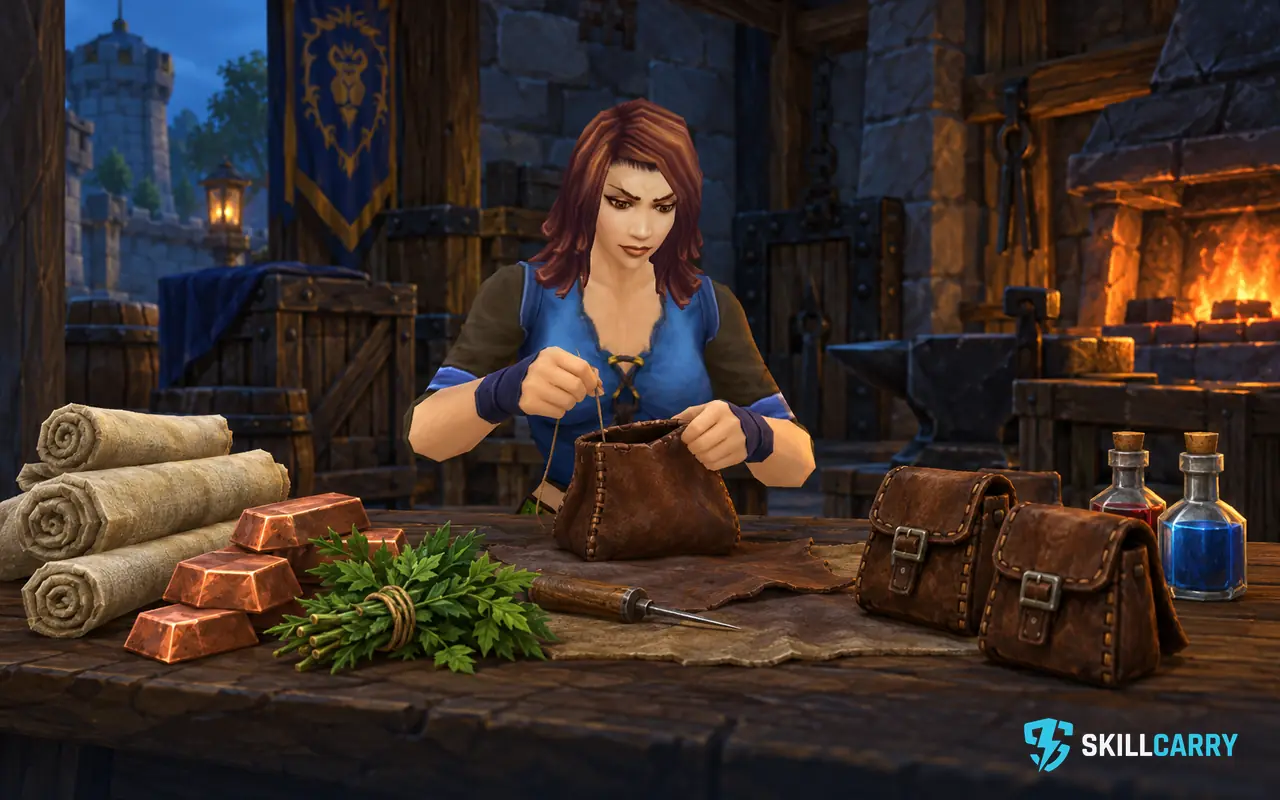
Mining can pop out Pyrite, Bauxite or Pitchblende. Herbs sometimes come with Frilled Lichen, Rosecap or Stranglevine. The Mining and Herbalism references on Wowhead do not establish complete source probabilities. Do not plan a payout around one rare drop.
Price these by the exact item name, separately from common ore or herbs. Keep a recipe’s required amount aside if you intend to craft it. A valuable unsold drop belongs in stock, not in today’s realised gold per hour. Record whether it sells across several outings before relying on it to pay routine bills.
Should you fill crates for Merchant's Favor or sell the materials?
Sell the materials when you need gold; fill the crate when its reward is something you actually want. Azeroth Commerce Authority for Alliance and Durotar Supply and Logistics for Horde take profession goods in crate turn-ins. Favor, reputation and gold are three separate outcomes, and only one of them pays a trainer.
When a crate asks for materials, compare these two choices:
- Selling the ingredients: what would the whole required quantity bring after auction fees? The vendor offer is a useful fallback for stock whose buyers you're unsure about.
- Filling the crate: missing ingredients and the trip to the hand-in add to its cost. The reward has to be something you value enough to justify giving up the material sale.
A crate can be worth completing for a recipe you personally want, even if selling the ingredients would leave more gold in your pocket. Buying that recipe as a business investment needs a little more thought: which product will repay it, and how many completed sales would that take? If the trainer bill is the immediate problem, a material sale may be the useful choice for now.
Auction House selling without tying up all your gold
A material you bring home often is a good first market to learn. Compare listings by the price of one item so a large stack does not distort the comparison. Then put up a small batch and wait for the result. If it returns, another deposit or a lower asking price changes what the next sale will leave you. Keep that experiment within the coins left after your character’s training reserve.
- An expired auction leaves stock, not a sale. Lost deposits from successive attempts belong in the cost of selling it.
- Smelting deserves the same comparison as any craft: all inputs priced against the return from selling the ore as it is.
- A green item's binding text matters before you collect the appearance or try to sell the equipment.
- The money set aside for training stays out of the trading purse, even when a bargain looks tempting.

Vendor fallback prices for common materials
Ten common materials are listed below with their database vendor offer. The right-hand column prices twenty of each, so you can read what clearing that stack would put in your purse. We checked the records on 6 October; a buyer may still pay more than the vendor. The client tooltip is the final price check before selling. Materials reserved for your own recipe or crate can stay out of this clearance decision.
| Material | One item | 20 items |
|---|---|---|
| Linen Cloth | 13 c | 2 s 60 c |
| Wool Cloth | 33 c | 6 s 60 c |
| Light Leather | 15 c | 3 s |
| Copper Ore | 5 c | 1 s |
| Tin Ore | 25 c | 5 s |
| Iron Ore | 1 s 50 c | 30 s |
| Silk Cloth | 1 s 50 c | 30 s |
| Medium Leather | 50 c | 10 s |
| Heavy Leather | 1 s 50 c | 30 s |
| Silver Ore | 75 c | 15 s |
When does an auction beat the vendor?
Suppose the stack vendors for 10 silver, and an auction would now leave 11 silver after its fee. Previous failed listings cost you 2 silver. The auction still adds one silver more than selling to the vendor now. Those old deposits reduced the whole session’s profit; they are already gone whichever choice you make next.
Keep the lost 2 silver in the session log. Do not subtract it again from both choices or demand that the next buyer repay it before you sell. For tonight’s training bill, the wait can still decide the issue: a higher possible sale tomorrow cannot pay the trainer today.
How do you calculate real gold per hour?
Take the coins you actually received, subtract the outing's expenses, divide by its total minutes and multiply by 60. Items still waiting for a buyer stay out of it. They may turn into money later, but tonight they can't pay a repair bill, and mixing them in flatters an outing that produced stock instead of sales.
Repairs and travel belong with bought materials and consumed supplies in those expenses. Write auction receipts after the fee. Already took a lost deposit off there? Then don't put it in expenses as well. Count it once.
| Worked example: half an hour, not a measured route | Gold in the example |
|---|---|
| Money looted and items sold to a vendor | 1.20 gold |
| Completed auction receipts after fees | 2.00 gold |
| Travel, repairs and supplies | 0.40 gold |
| Realised profit | 2.80 gold, or 5.60 gold/hour |
| Unsold materials | Record separately; not part of the 2.80 gold |
Those numbers explain the calculation; they are not a measured Forever farm. Repeat the route on another session before building a large budget around it. One lucky rare drop says little about ordinary earnings.
Calculate your run and compare a craft
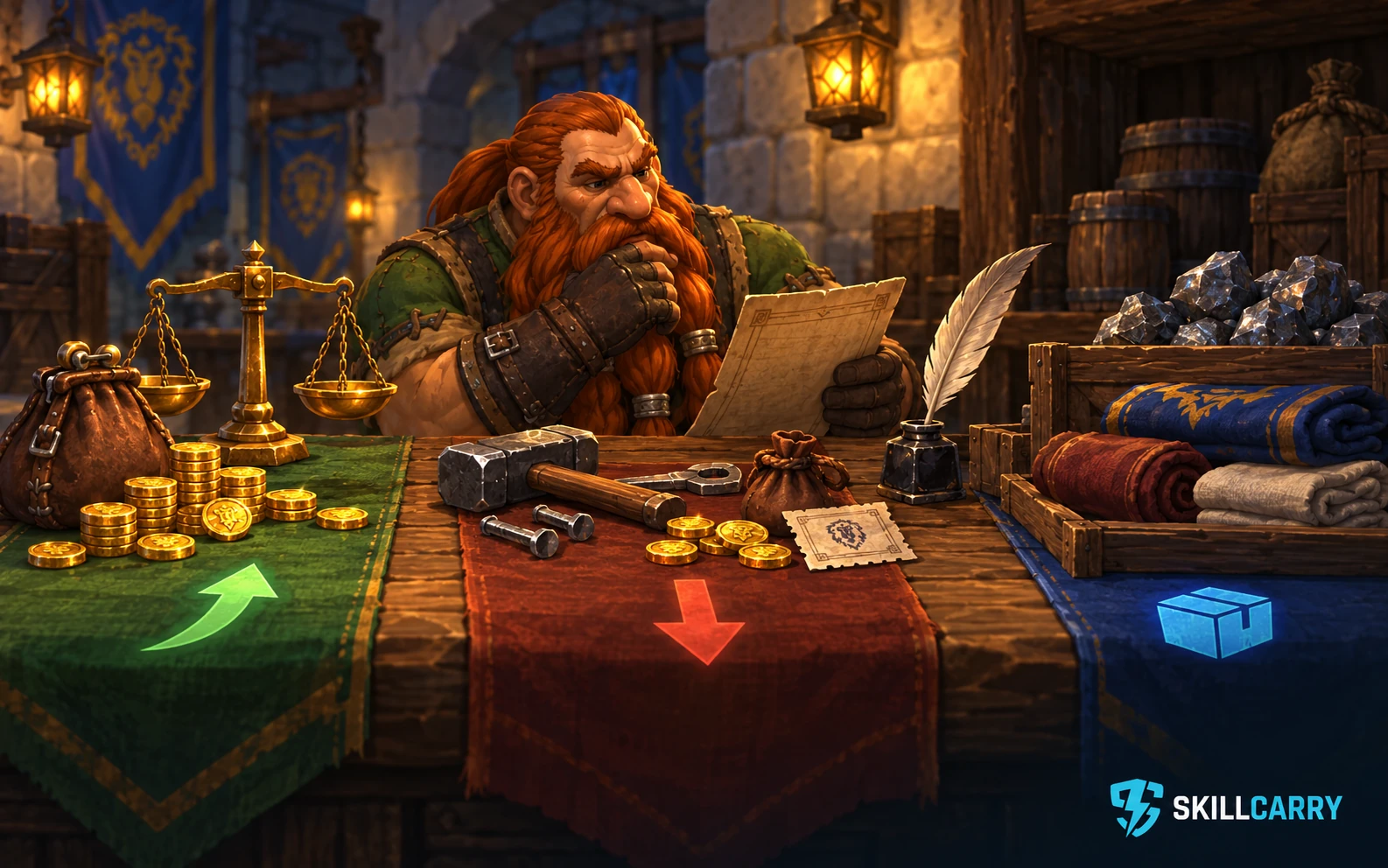
Imagine coming back with cloth worth two gold still sitting in your bag. Entering it as a completed sale would raise the result even though nobody has paid you. Give it a stock estimate instead, then move the actual proceeds to sales when it sells. The form uses gold for each money amount, including decimals: 80 silver is 0.8. Its preset amounts are only a demonstration. With your own completed records entered, the goal estimate tells you how many more hours that particular return would require, rather than promising a rate for the next outing.
Preparing for level 60 and a fresh launch economy
The launch economy will follow players through their leveling and profession needs. Bags, materials and commonly used supplies are sensible things to watch, without buying hundreds of items in advance. A few completed sales give you a reason to expand; a page of hopeful listings doesn't. What the beta can teach is how to read those sales. The launch price itself is still anyone's guess.
Our Legacy talent calculator can help compare available perks. Allocate for your actual activity and check the live tooltip; a perk's advertised benefit should not be added to your earnings as if you had measured it.
Want to skip part of the farm? Write down what you are saving for first, so you know the exact amount. Then check our WoW Forever gold page: it puts delivery, mount gold packs and a booster farming on your own character side by side.
"WoW Forever gold farming guide" FAQ
What is the best beginner gold farm in WoW Forever?
Our starting choice would be questing, with gathering stops that don't take you far off course. The trainer bill comes first, along with repairs and the supplies needed to carry on. A separate loop or a craft becomes an easier experiment once those costs are covered and a slow material sale won't leave the character stuck.
Does the old crafted-wand vendor shuffle still pay?
Not the old common and uncommon wand shuffle. Their vendor price was changed to 1 copper in the 1 October beta build, so the cloth, disenchant and wand loop is gone. You can still look for a player who needs the wand, but you'll have to price and sell it as equipment.
Should I save every material until launch prices rise?
No price rise is assured. Sell enough to keep your character going. Only hold what you could live with never selling. The beta market is a weird little place, with limited access and a level ceiling of 30. Launch demand won't look the same. A big hoard is a bet, not savings.
Are crate turn-ins a direct gold farm?
We'd decide from the particular reward rather than call every crate a gold method. Someone seeking a recipe might happily spend the ingredients to unlock it; someone saving for training may need those materials' sale proceeds instead. Favor and unlocks don't belong in the cash total. When money is the goal, compare a completed material sale with the crate's actual reward.
How do I work out gold per hour after a run?
Write down departure time, time spent selling, cash received, expenses and unsold stock. Cash minus expenses, split over the minutes you played, times 60. Start and stop at the same spots next run. Was the zone packed? Jot that down too, so one rough evening doesn't kill a decent route.
Which gathering professions pair best for gold?
Look at your route first. Killing beasts for quests anyway? Mining and Skinning fit nicely. Mining plus Herbalism gives you a second set of nodes, but only pays if the tracking switches and detours add sold value. Don't drop a crafting profession over a short gold gap; you lose its skill and recipes.